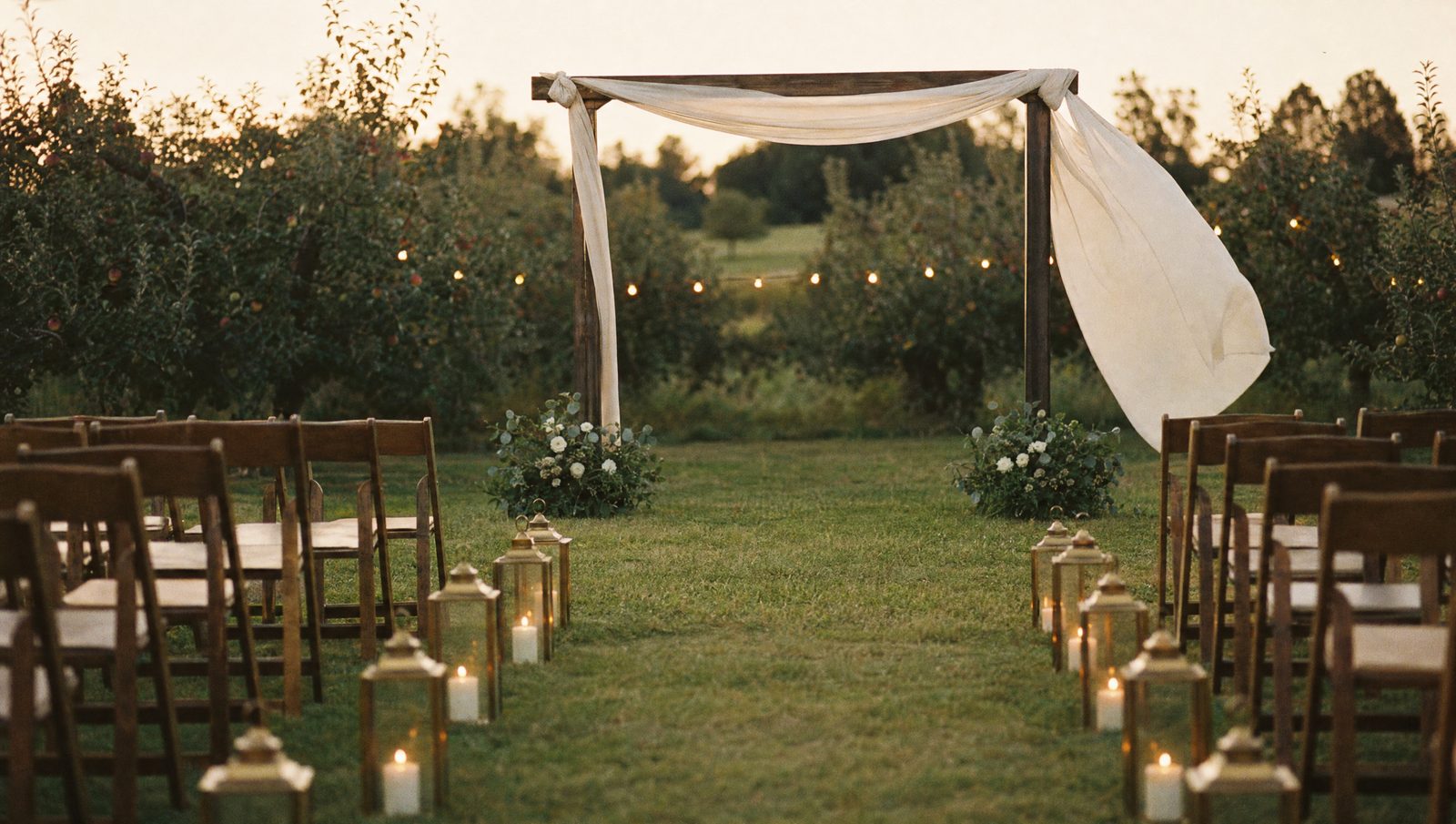
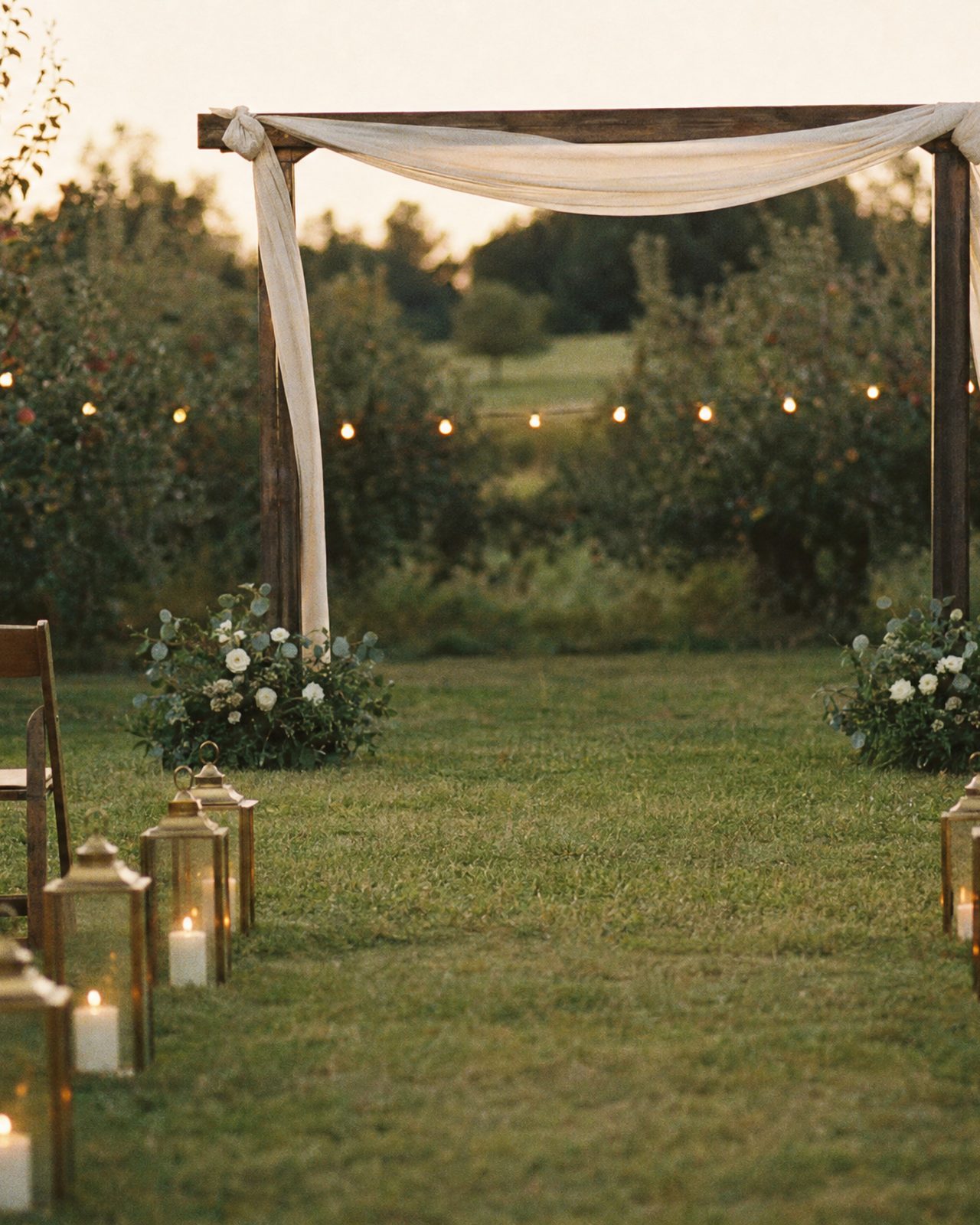
A DIY wedding arch in an orchard at dusk — plain frame, ivory chiffon, greenery at one corner, string lights in the trees behind
Gathered & Vowed

The Editorial · Ceremony

Wedding Arch Ideas, from a Farm That Has Built Six

Every shape, honestly. Where the flowers go and where they don't. What it actually costs to rent one, buy one, build one, or hand it to a florist — and the $170 version we put up in our own orchard.

By Ana  ·  Photographs by the editors

Nobody remembers an arch. I have stood in front of six of them now — two I built, one I rented, one I borrowed off a neighbor's grapevines, one a florist did for a friend with a budget I still think about, and one that was just two apple trees — and what I remember from every one is the faces inside it and what the light was doing behind. The arch is a frame for the photograph. It is not the photograph.

That is the whole argument of this piece, and if you take only that, you can stop reading and save yourself eight hundred dollars. The people who are happiest with their arch on the day are the ones who spent the least on the structure and put the money, or the attention, into the three things that show: where it stands, what's tied to it, and one corner of real flowers.

What follows is everything we know. Shapes first, because that is the question everyone asks first and the one that matters least. Then flowers, then money, then the one we build ourselves, step by step, with every piece itemized and linked in the Lookbook so you can buy the exact version.

The orchard arch at dusk, chiffon moving in the wind, lanterns down the aisle
Ours, at the hour it's for. The string lights are in the trees; the arch is wearing nothing but chiffon and one corner of stems.

The shapes, honestly

There are five shapes that show up at nearly every wedding in America now, and one non-shape that beats most of them. Here is what each one is actually like to own for a day.

Two posts and a top

The classic arbor: two uprights, a crossbar, a square or softly rounded top. It is the cheapest frame to buy, the easiest to build from lumber, and the one that disappears best behind fabric and flowers — which is the point. It photographs as a doorway, and a doorway is exactly the right metaphor. If you're deciding in ten seconds, this is the one.

Weakness: bare, it looks like a garden-center display. It needs one thing on it. One.

The hexagon

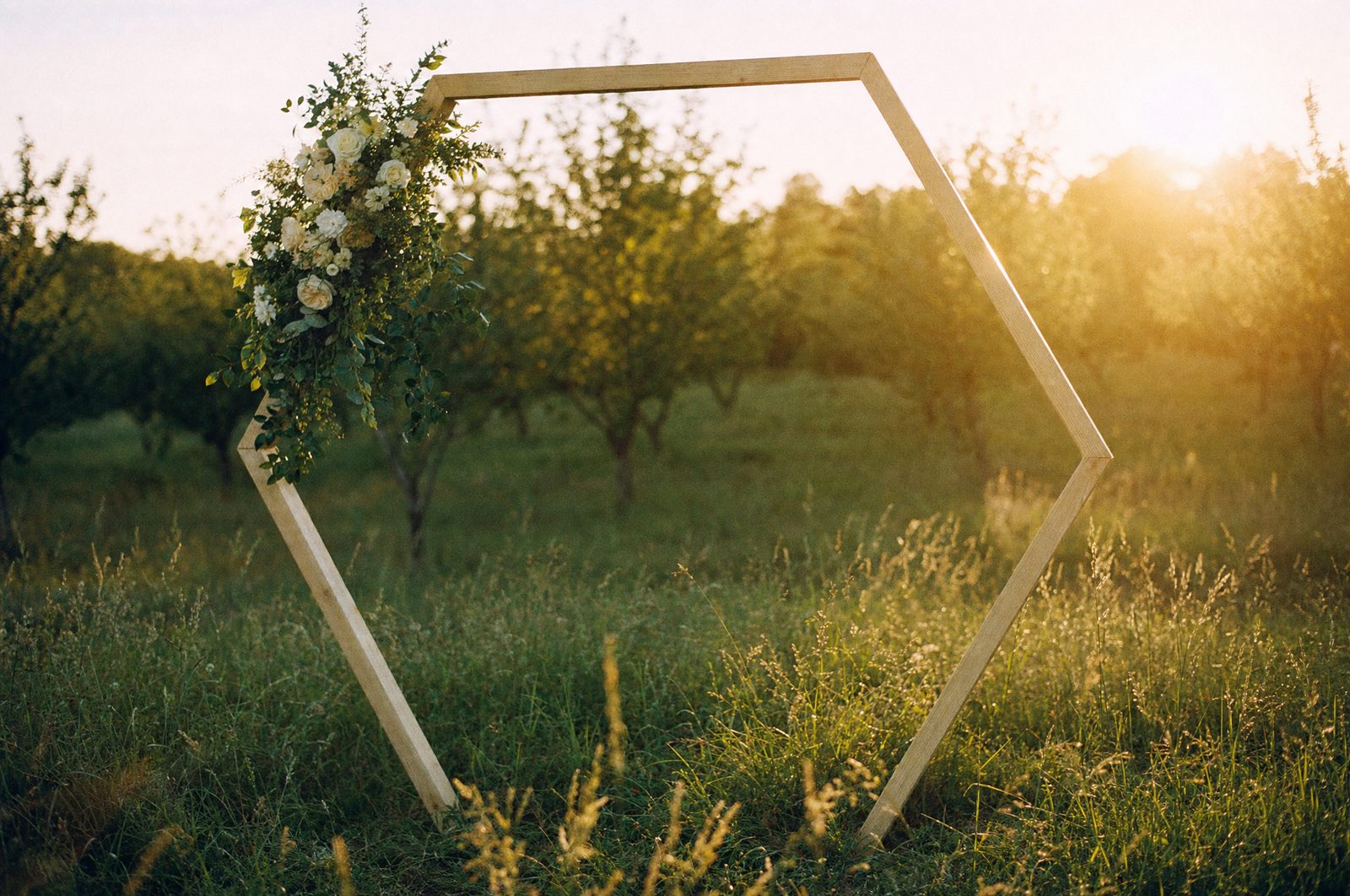
Six sides, usually wood, usually stained dark. It became the shape of the last five years because it photographs well from the aisle and carries an asymmetric flower cluster beautifully — flowers on the upper-left corner and a little at the opposite foot, nothing else. That 70/30 placement is the entire reason the hexagon works; dress all six sides and you have built a gazebo.

Weakness: it's wider and heavier than you think, and it wants a flat, firm floor. On soft orchard ground it leans, and a leaning hexagon looks drunk in every photo.

The triangle

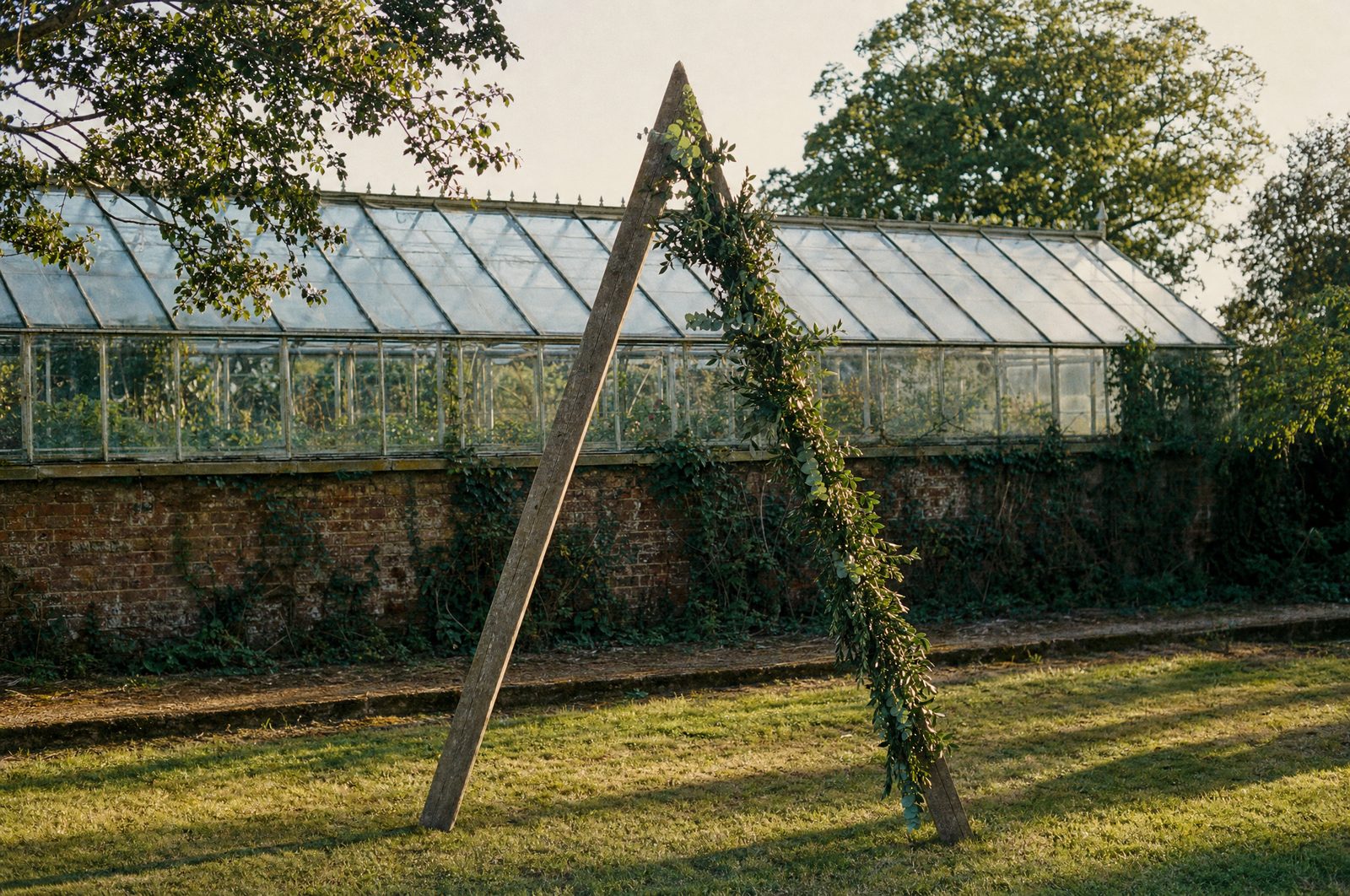
An A-frame of three timbers. It's the most honest farm shape — it looks like something that already lived on the property — and it's the cheapest to build well, because three boards and six bolts is a Saturday morning. Garland runs up one leg only. It's also the narrowest at the top, so tall couples stand a step in front of it rather than under it, which is fine; the camera doesn't mind.

The circle, or moon gate

A metal ring, six to eight feet across. It's dramatic and it's the one most likely to make a florist's eyes light up, because a half-crescent of flowers along one arc is the prettiest single thing you can do to any frame. It is also the one most likely to catch wind, because a ring is a sail with a hole in it. Rent it, weight it, and don't put it on a ridgeline.

The chuppah

Four poles and a canopy — a tradition with a meaning, and the one arch that doesn't pretend to be anything other than a roof over two people. If the canopy is a family cloth, a tallit, a grandmother's tablecloth, it is the most moving structure on this list, and it costs four poles. Hold the poles with four friends if you want the oldest version of it, or stake them and let the cloth do the talking.

No arch at all

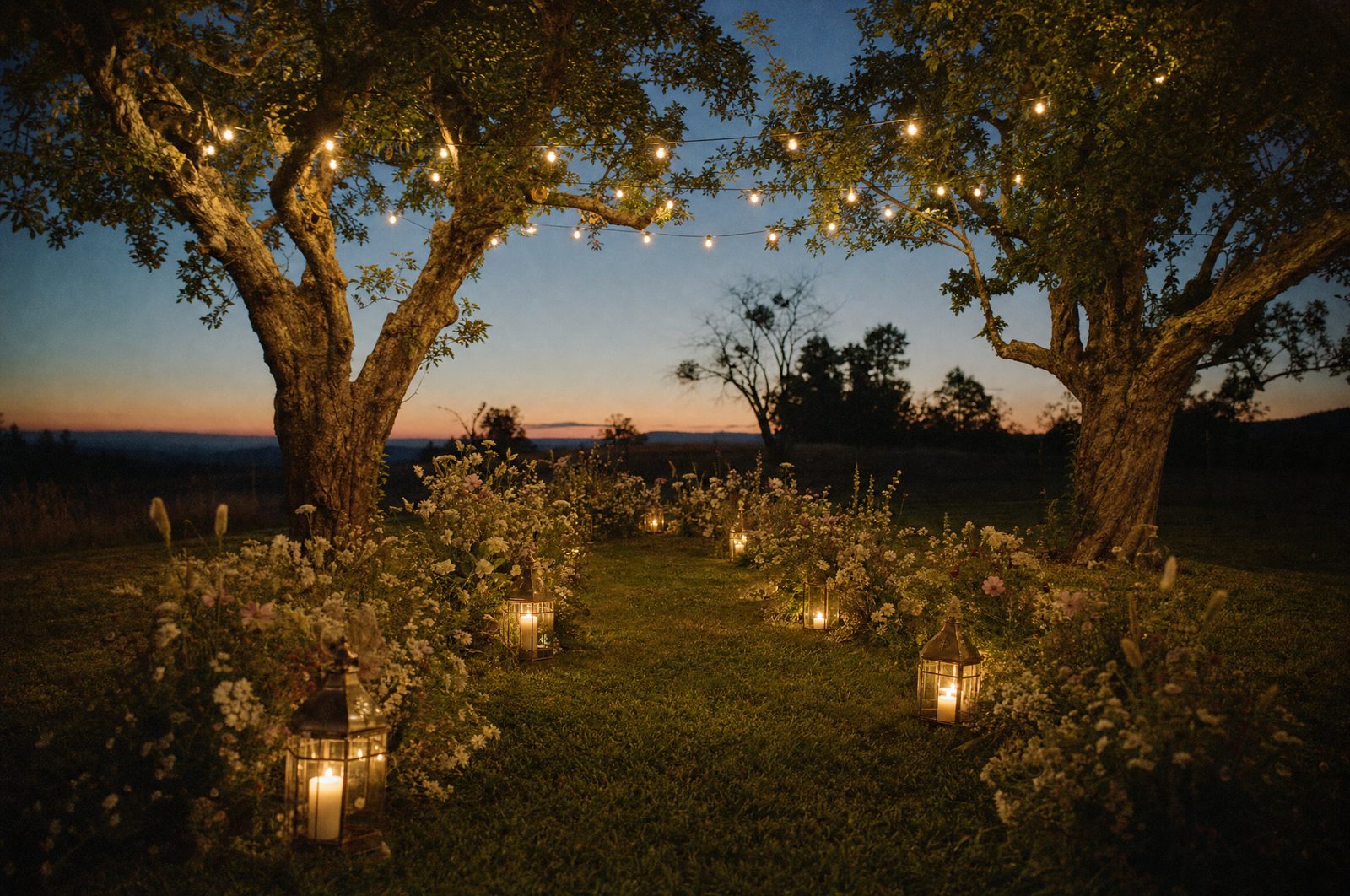
Two trees. A big window. The open end of a barn. The top of a hill with the sun going down behind it. Every one of these is a frame, and every one of them is free. We did a ceremony between two old apple trees with a runner of wildflowers and lanterns marking the aisle and nothing else, and I have never had a couple ask me after the fact where their arch was. The photographs have the whole orchard in them instead of a rectangle of it.

If you have a view or a tree, use the view or the tree. Spend the arch money on the dinner.

A bare wooden hexagon wedding arch in a farm meadow at golden hour with flowers on one upper corner only
The hexagon, dressed the only way it should be: one corner, and the rest left alone.
A triangle A-frame wedding arch of weathered timber in front of an old greenhouse with garland on one leg
The triangle in front of our glasshouse. Three boards, six bolts, one garland.
A wedding ceremony with no arch: two apple trees frame the aisle, a runner of wildflowers and lanterns between them
No arch. Two trees and a runner. Nobody missed it.
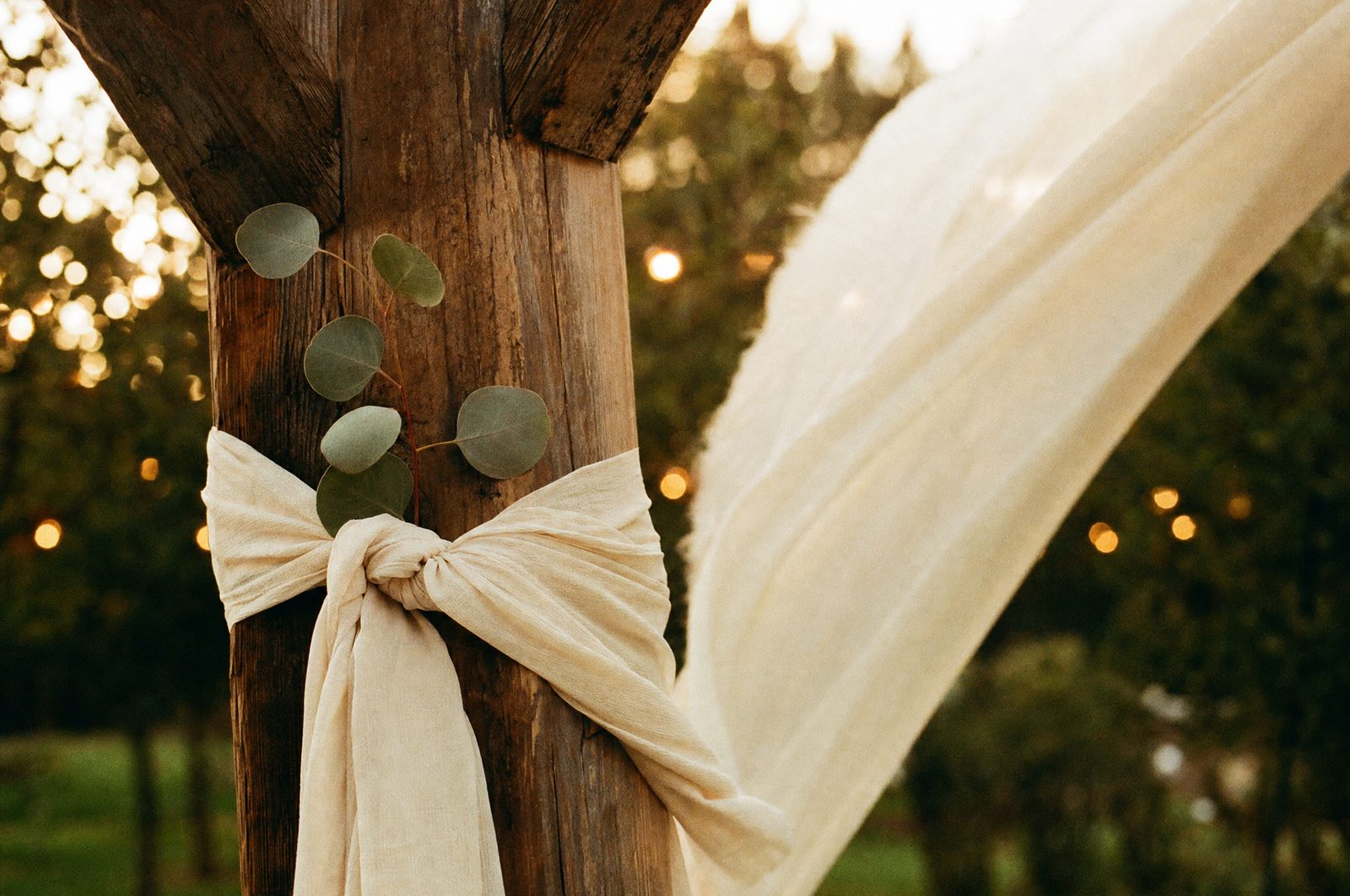
Ivory chiffon knotted twice around a rough wooden arch post with a sprig of eucalyptus tucked into the knot
Two knots, one sprig. The fabric is doing most of the work on this arch and it cost twenty-five dollars.

Where the flowers go, and where they don't

One corner. I will keep saying it. Flowers on an arch read from forty feet away, and from forty feet away a frame covered evenly in flowers is a green rectangle. A frame with one heavy cluster high on the left and a small echo at the opposite foot is a composition — the eye goes up, crosses the couple, comes down. Florists call this the 70/30 and it is the single most reliable trick in ceremony design.

Build it in two layers. The base is faux greenery — a good eucalyptus or ruscus garland, zip-tied to the frame the day before, which costs twenty dollars and holds its shape in heat. The top layer is real: a florist weaves actual stems into the faux base on the morning, in water tubes or in floral foam cages if the day is hot. You get the density of a full floral arch for the price of a few dozen stems, and the fake part is invisible because nothing fake is on the outside.

Choose stems that hold without water for an hour in the sun: garden roses, lisianthus, stock, eucalyptus, olive, ruscus, dried grasses. Leave the hydrangeas on the table where they can drink. Chiffon or cheesecloth does the rest — it moves, and moving fabric makes a still frame look alive in every frame the photographer takes.

And hire the florist for the morning, not the whole arch. The weaving is twenty minutes of an expert's time. The frame, the fabric and the base are yours. The directory is full of people who do exactly this.
What an arch actually costs

Honest numbers, the kind nobody puts in the pretty listicles. These are ranges from our own receipts and from the florists and rental houses we work with; your town will move them some.

The one we build: the $170 orchard arch

This is the arch in the pictures, and the one that goes into the orchard every time we're asked. A plain two-post frame, one bolt of ivory chiffon, a faux base with real stems woven through one corner, string lights in the trees behind it — never on it — and lanterns down the aisle. About seven feet tall, five wide. Two people, one stepladder, ninety minutes on the morning of.

Every piece is in the Lookbook with a price and a link, and the room itself is pinned so you can tap anything in the picture: the orchard arch, itemized.

Don't build it the day before. Dew does ugly things to chiffon, and an arch left overnight in a field is a kite by morning.

  1. Stand it where the light will be

    Walk out at the ceremony hour a week ahead and see where the sun sits. You want it behind the arch or off to one side, never in your guests' eyes. Mark the feet with two stakes so there's no debate on the day.

  2. Weigh it before you dress it

    Sandbags or tent stakes on every foot, then shove it hard. A dressed arch catches wind like a sail. Everything that ever goes wrong with an arch goes wrong right here.

  3. Tie the chiffon twice, high and loose

    Fold the bolt over the top rail, one knot at each upper corner, tails to the grass on one side. Don't center it, don't pin it. The wind will arrange it all afternoon and do a better job than you.

  4. Zip-tie the faux base to one corner

    Upper-left third of the frame, low to high, and a little at the opposite foot. Leave the rest bare. The florist weaves real stems into it on the morning; it holds water-free for the hour you need.

  5. Lights behind, lanterns last

    String lights tree to tree in a shallow swag behind the arch so the frame stands in front of a lit orchard instead of wearing bulbs. Lanterns go down the aisle after the chairs are in, lit ten minutes before the music.

Wind, weight, and the other boring truths

Size. Seven feet tall, five to six wide. Tall enough for air over the tallest head under it; wide enough for two people and whatever walks up with them. Taller dwarfs you in photographs; narrower reads as a door.

Ground. A hexagon and a circle want a flat, firm floor. Two posts forgive a slope. Put a paver under each foot on grass — the feet sink by the time the vows start, and a sunk foot is a lean.

Time. Fabric and faux base the morning of, two hours out. Florist at ninety minutes. Lanterns at ten. Take it down before the dancing; the chiffon goes on the sweetheart table and the lanterns go down the path to the cars.

What people ask us

How do you make a cheap wedding arch?

Buy or borrow a plain frame instead of a pretty one, and spend on what goes on it: one bolt of chiffon, a faux-greenery base, and a small order of real stems from a florist for one corner. Ours is about $170 in parts before the florist. A borrowed frame brings it under a hundred.

What can you use instead of a wedding arch?

Two trees with a runner of flowers and lanterns between them. A chuppah made of four poles and a family tablecloth. An arbor or gate already standing in a garden. One tall arrangement on a pedestal beside you — an altar instead of a frame. A doorway, a big window, the open end of a barn. All of these frame a couple without any structure at all.

How much does it cost to make your own wedding arch?

Roughly $60 to $150 for a metal or wooden frame, $20 to $40 for chiffon, $15 to $30 for a faux greenery base, plus the flowers: a modest florist order for one arch corner usually runs a few hundred dollars, and a fully flowered arch from a florist can run well over a thousand. Building the frame from lumber is usually under $80 in wood.

Does Hobby Lobby sell wedding arches?

Yes — craft and party stores sell plain metal arch frames, usually around a hundred dollars or less, and they are fine. The frame is the least important part of an arch. What matters is that it's weighted, that the fabric is loose, and that the flowers sit on one corner rather than all over it.

How tall should a wedding arch be?

About seven feet tall and five to six wide. Enough air above the tallest head under it, enough width for two people and whatever walks up the aisle with them. Much taller and it dwarfs you in photographs; much narrower and it reads as a doorway.

— Ana

The orchard arch, itemized

Same arch, live — every number is a pin with the piece and the price.

The whole arch, piece by piece, in the Lookbook →

Keep reading

A Wedding Grows in the Greenhouse · Everything We Know About Old Lace · The Unfussy Invitation

Read next, in the Lookbook: Vows in the orchard · The long table, an hour before

The stems for your one good corner start at a florist near you.