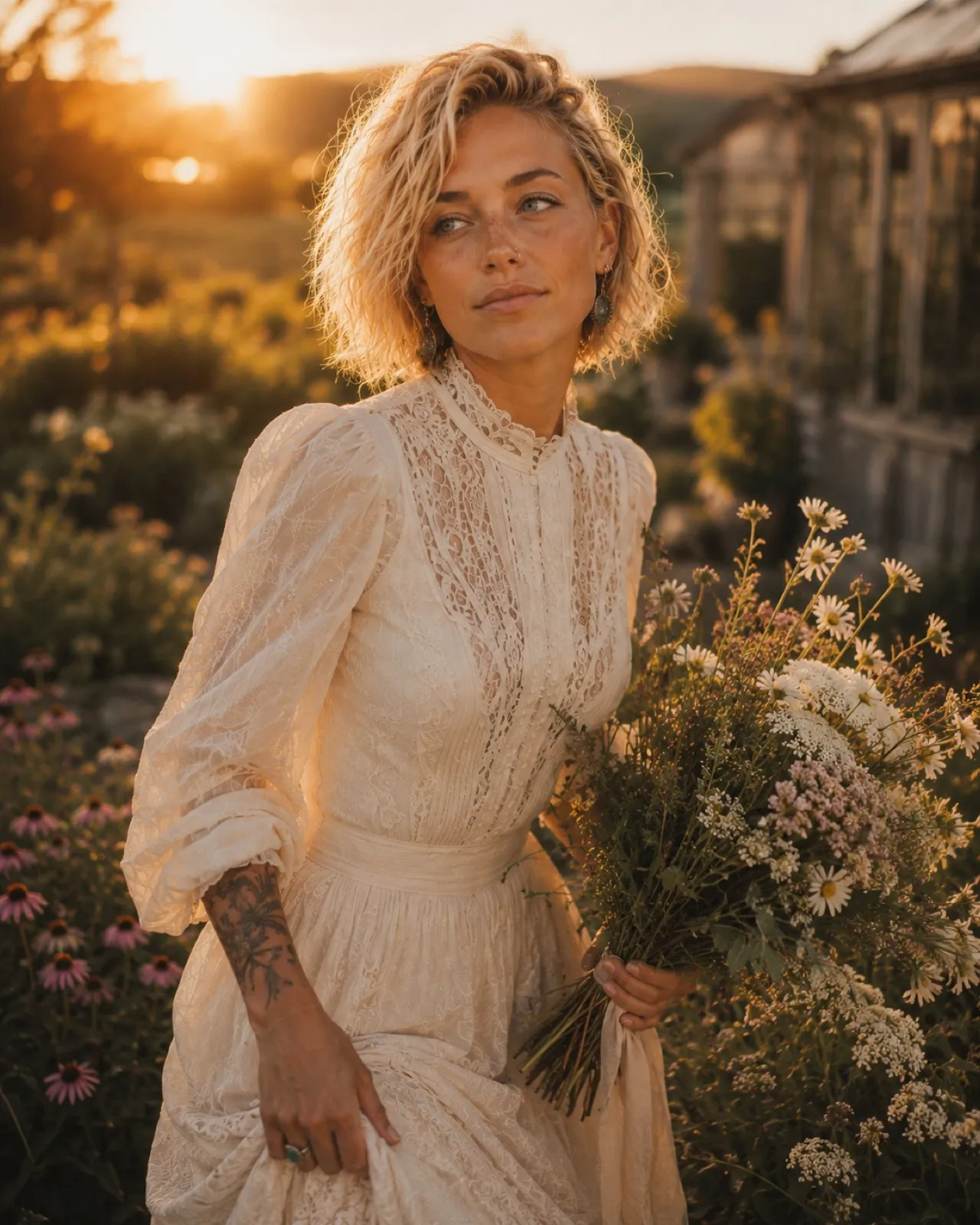
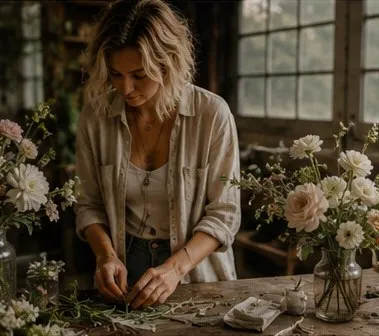
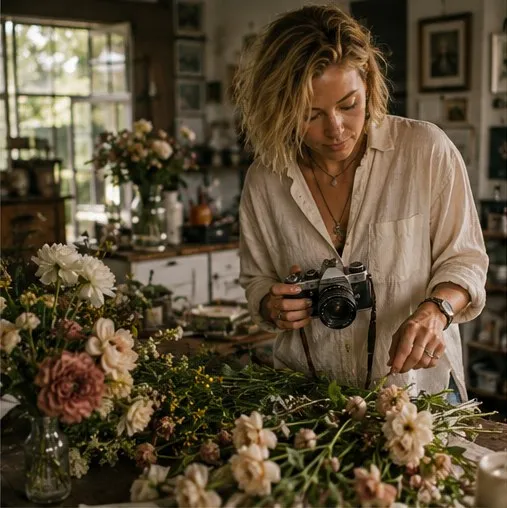
Fall is the best flower season of the year, and most fall wedding boards get it wrong. They are full of burnt-orange roses flown in from the equator and wheat that nobody grew. Meanwhile the actual fields, Sam's cutting rows included, are the fullest they will be all year. The dahlias are at their best, the mums are just coming on, the celosia looks like velvet, and every hedgerow in the country has fruit on it.
That fullness doesn't last. September and October give you more flowers per dollar than any month of the year, and then one clear, still night in October or November ends half of it before breakfast. A fall wedding plan that knows this is cheaper and better-looking than one that doesn't.
So here is what I know about it, from the ledger side of the farm. It goes flower by flower, then month by month, then frost, palettes, centerpieces and money. Last comes the most useful thing I can tell you, which is to ask a florist near you what's cutting this week and build around the answer. The directory is where to start.
These are the flowers and branches that are truly in season across most of the continental U.S. in fall. Each one is marked local or shipped, because that difference decides both the price and how much you can count on it.
The flower of the season, and the reason to marry in September. Dahlias bloom from midsummer until the first hard frost, and they are at their fullest in late summer and early fall, when the nights cool and the heads get big and clean. Café au Lait for blush, the dark reds for drama, and the little ball types for boutonnières and bud vases.
They have two weaknesses. They don't open much after cutting, so buy them nearly open, and they don't forgive frost at all. One hard frost blackens the plant, and local dahlias are done for the year.
Forget the grocery-store pot on the porch. Mums are short-day plants, which means they set buds when the nights get long, so they flower in fall naturally rather than because anyone forced them. Cut-flower mums are nothing like bedding mums. You get spiders, spoons, quills, and big shaggy football mums in cream, bronze, butter and a pink that looks like old silk. They last a very long time in water.
They also take a light frost much better than dahlias, so for an October or November date they are your backbone.
Celosia comes as crested brains, feathery plumes and wheat-like spikes, and its texture reads as fall even in pink. Amaranth is the one that drips. Its long ropes of burgundy or green hang over the edge of a compote and make a table look like it was gathered rather than bought. Both are warm-season annuals that bloom until frost kills them, and both dry beautifully, so what you don't use can hang in the barn until Thanksgiving.
These belong to the early part of the season. Zinnias bloom from midsummer until frost, but by October they are slowing down and often mildewed, and they are frost-tender, as marigolds are. For a September wedding they are cheap and generous and come in every color, including the good rusts and corals. For late October, don't count on them.
Marigolds are having a deserved revival. The tall cut-flower kinds have long stems and an honest, pungent smell, and they have been a ceremonial flower for a long time, from Día de Muertos altars to the garlands at Hindu weddings.
This is what makes an arrangement say October instead of June. Rose hips ripen from late summer through autumn in red, orange and nearly black. Crabapples hold their little fruit on the branch for weeks, and some are gold instead of red. Viburnum berries turn red in fall. Put a few branches of any of them into a design and it stops being a bouquet and becomes a season.
Two cautions. Some berries stain and some are toxic, so keep them out of the cake and away from small children. And cut from your own hedge or with permission, never from a roadside you don't own.
Ornamental grasses plume in fall. Oak leaves in rust and leather, smokebush going from plum to flame, and the last of the eucalyptus are the fillers that do the most work for the least money. Grass gives an arrangement movement, which is what separates a table that looks alive from one that looks like it came from the florist's cooler.
Roses. Most of the roses sold in America are grown in the highlands of Colombia and Ecuador, where the same season runs all year. They are consistent and affordable, and they are not in season anywhere near you. That's fine. Use them as the steady part of the design, not as its reason.
Ranunculus. In most American gardens ranunculus is a spring flower, so in fall it's flown in. It is lovely and reliable, but it's never local.
Garden roses. The ruffled, fragrant ones are grown mostly abroad for fall, with some from California. They are the most expensive stem on most fall tables, and one per arrangement usually does the job of five.
Everything at once. Dahlias at peak, zinnias still going, celosia and amaranth big, marigolds, the first mums, the first hips. It's the cheapest month of the year to be generous, so build the whole design out of local stems and use imports only as accents, if at all.
The richest color of the year, with berries, crabapples, oak and smokebush turning. Dahlias continue until frost, and where that falls depends on where you live. Plan for dahlias, and give your florist written permission to swap in mums.
In most of the country this is post-frost. Mums, hips, berries, grasses, dried celosia and foliage make up the season, with imported roses and ranunculus for softness. It is a quieter, more textured table, and I think the most beautiful of the three.
First frost is the single most important date on a fall wedding calendar, and nobody puts it there. A light frost scorches tender petals. A hard freeze, the kind that sits in the upper twenties for a few hours, ends dahlias, zinnias, celosia, marigolds and amaranth outright. Much of the northern U.S. usually sees it in October. Much of the South and the coasts see it later, in November or after.
Your florist knows this and is quietly planning for it. Make that easy for them. Pick a palette instead of a stem list, approve a list of substitutes ahead of time, and let them move on the day without needing to call you.
The flowers that survive frost are the ones that make it look like fall anyway. Hips, berries, oak and grass all come through a cold night without trouble.
Your county extension office or a frost-date lookup by ZIP code will give you the typical range. If your date lands inside or after that window, plan for a post-frost table and treat dahlias as a bonus.
Give your florist "burgundy, blush and oat, with texture" instead of "forty Café au Lait dahlias." That way, if the frost comes, they swap one blush flower for another and the design stays the same.
Dahlias become mums. Zinnias become celosia or dried celosia. Fresh amaranth becomes dried. Put it in the contract in a single sentence so nobody panics in the cooler.
Hips, crabapple, viburnum, oak and grass should make up about a third of every arrangement. If the tender flowers are lost, the design still looks full and still looks like the season.
A few imported roses or ranunculus in the palette colors are cheap insurance that can be ordered in the last week if the fields go black.
Hips, grasses and turning leaves carry the season on their own, so the color doesn't have to. Burnt orange is fine, but it isn't the only fall palette. Here are four that are all in the field at the same time.
Near-black and burgundy dahlias, dark amaranth dripping off the edge, purple smokebush, and a few plum mums. Add pale grass so it doesn't look like a bruise. This one looks best by candlelight.
Blush and latte dahlias, cream spider mums, pale grasses, and one garden rose per arrangement if you want it. It is soft without being summery, because the grass and the late light keep it in October.
Viburnum berries and red rose hips, raspberry celosia, white mums, and gray-green foliage. It is the brightest of the four, and the only one I'd put on a daytime table without hesitation.
Butter and ivory mums, gold crabapples on the branch, wheat-colored grass, and a little oak for weight. It is warm without being orange, and it photographs like late afternoon even at noon.
Low and gathered. Use a compote or a wide, shallow bowl with a pin frog or a ball of chicken wire in the bottom. Start with three or five focal flowers, which means dahlias in September and mums later, set low. Then add a line of amaranth spilling over one edge, a few hip or crabapple branches for weight, and one or two plumes of grass standing up above everything for movement. Keep it under about fourteen inches so people can talk across it.
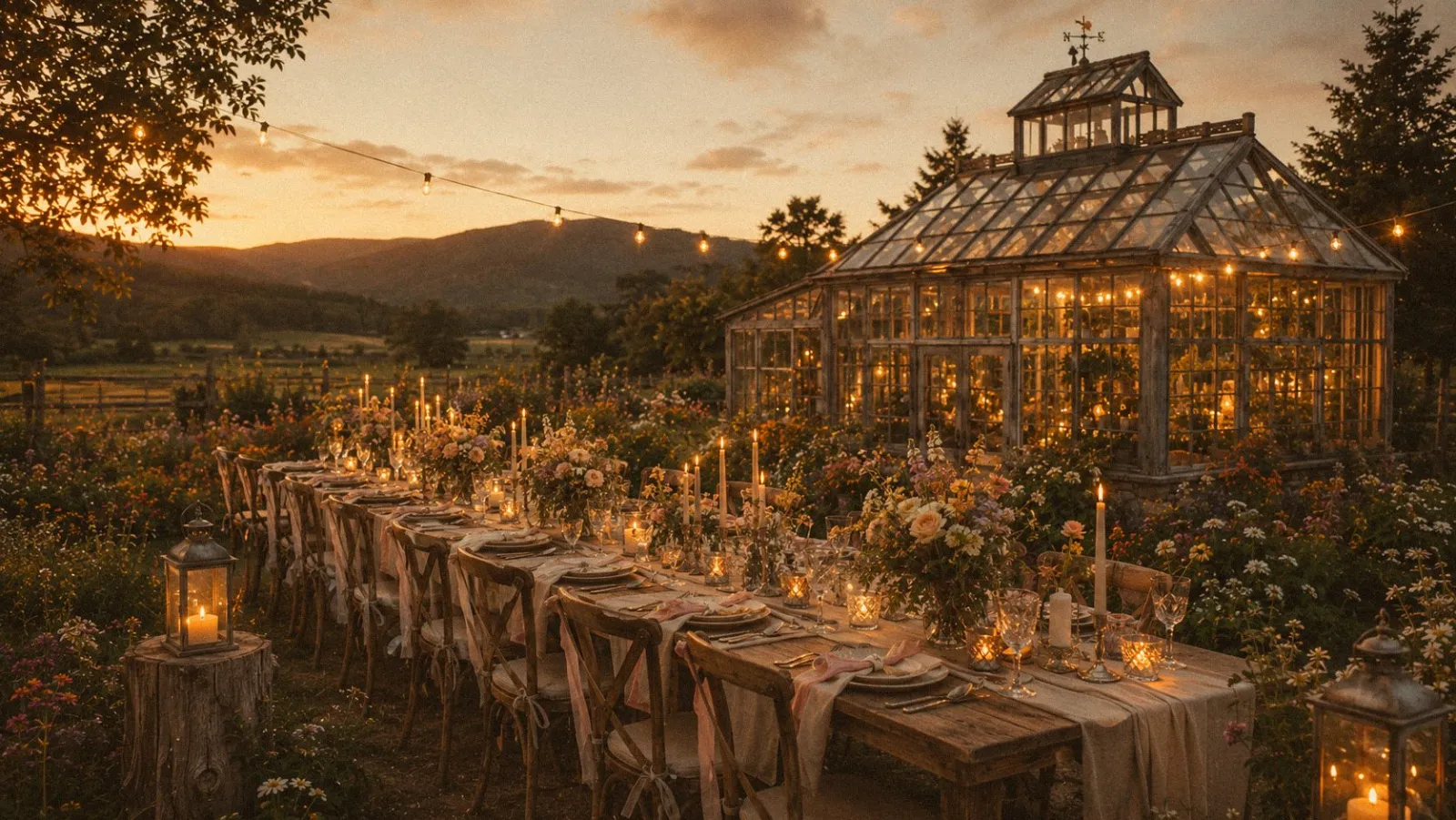
Bud vases, down the whole table. This is the cheaper version and often the prettier one. Put one to three stems in each small bottle, vary the heights, and run them the full length of the table among the candles. It suits fall especially well because single dahlias, a sprig of hips and a stalk of grass each look good alone. It is how we set the long table in the Lookbook, and a set of glass bud vases runs about $25 for the lot.
Both styles last the evening at room temperature. Condition your stems overnight in cool water, and don't set dahlias in direct afternoon sun on the day.
Some links may earn us a commission — the whole story, plainly.
The reason is dull. A flower cut down the road yesterday has no airfreight, no cold chain across a hemisphere and no importer's margin, and in its peak weeks the grower has more of it than they can sell. A flower that has to cross an ocean, or that you want out of season, carries all of those costs. Where I have a sourced number I give it. Where I don't, I tell you which way the price moves, because that's what you can actually bargain with.
Everything above is the national picture. What matters for your wedding is what is growing within an hour of your venue during the week of your date, and only someone local knows that. A florist in the mountains and a florist on the Gulf can be working with different flowers on the same Saturday.
So call one, preferably an independent, and ask these questions directly. What's cutting locally right now? What will be cutting the week of my date? Who are your growers? What do you do if we get a frost? A good florist will light up at the questions. And if they tell you the local dahlias this year are the best they have seen, believe them and build the tables around it.
Our florist directory lists 4,880 independent shops across all fifty states and D.C., researched from the public record, and nobody pays to be in it. Look up your town, find the ones their own customers name for wedding work, and start there. If you want to buy straight from a farm, the Association of Specialty Cut Flower Growers keeps a directory of local growers too.
Then take what they tell you and put it in front of a frame. Our arch piece shows where the flowers go: one corner, fall stems that hold without water, and grass in the knot.
In most of the U.S., September through first frost is dahlia season, and chrysanthemums, celosia, amaranth, zinnias, marigolds and asters are cutting too. Add the fall-only material: rose hips, crabapples, viburnum berries, ornamental grasses, oak and smokebush. Roses, ranunculus and garden roses are available in fall as well, but they are almost always shipped in rather than grown down the road.
Whatever is flooding your local growers that week. In early fall that usually means dahlias, zinnias, celosia and mums, with grasses, hips and foliage to fill. Ask your florist what is cutting locally and let them build around it. A design that insists on a specific imported variety costs more and has less room to bend.
Local dahlias end at the first hard frost, which comes in October across much of the northern U.S. and later in the South and along the coasts. For a November date, plan on chrysanthemums, berries, hips and foliage, and treat dahlias as a maybe that your florist confirms the week of. Imported dahlias exist, but they travel poorly and cost accordingly.
Low arrangements of dahlias or mums with a trailing line of amaranth, a few rose hips or crabapple branches for weight, and a feather of grass for movement. Or skip the centerpiece and run bud vases down the table, one to three stems each. Both hold well at room temperature for an evening, and both let guests see each other across the table.
Standard roses are grown year-round in the highlands of Colombia and Ecuador, which supply most of the roses sold in the U.S., so they are always available and usually reliable. They are not local and not seasonal. Garden roses and ranunculus in fall are generally imported too. Use them as the steady part of a design and let the local flowers be the part that changes.
Oxblood and smoke (burgundy dahlias, dark amaranth, purple smokebush). Café au lait and oat (blush dahlias, cream mums, pale grasses). Cranberry and sage (viburnum berries, raspberry celosia, gray-green foliage). Honey and ivory (white and butter mums with gold crabapples). Each one still reads as fall because the textures, hips and grasses carry the season, so the color doesn't have to.
— Ana
Keep reading
Wedding Arch Ideas, from a Farm That Has Built Six · A Wedding Grows in the Greenhouse · The Unfussy Invitation
Read next, in the Lookbook: The long table, an hour before · Vows in the orchard · One cake, two stands
What's cutting near you this week? Ask a florist near you.