
The Editorial · Textiles
Everything We Know About Old Lace
Lace is handwriting you can wear. Here is how to find it, how to read it, and how to let it into your wedding without turning the day into a costume.
By Ana · Photographs by the editors
Every piece of old lace is a woman's hours, knotted down where you can see them. Before it is romantic, before it is bridal, it is arithmetic: a bobbin crossing a bobbin some hundred thousand times, an evening at a time, usually after the real work of the day was done. When you hold a yard of it to the window you are holding somebody's winter.
That is why machine lace never quite convinces, even when the pattern is copied thread for thread. The pattern was never the point. The irregularity was the point — the place where the tension wanders because the baby cried, the mended corner that doesn't match because the mending came twenty years later. Lace is handwriting, and machines print.
We keep ours in a cedar box that was Grandma Wren's, and nearly every long piece in it was found, not inherited: estate sales, the bottom drawer of a dresser bought for the dresser, one tablecloth from a church rummage sale in Tupelo that somebody had folded around a casserole dish like it was newspaper. Old lace is not rare. It is just unlooked-for. The generation that made it made a lot of it, and the generation that inherited it mostly doesn't check that drawer.

Hold it to the light
Handmade bobbin lace has a mesh that wobbles — no two openings quite the same. If the ground is perfectly regular, a machine made it, which is fine, but pay a machine price for it.
Find the mend
A repair is not damage; it's provenance. Somebody loved this piece enough to fix it by hand. A mended corner is the part we'd frame.
Smell it, truly
Cedar and paper are good news. Mildew is a negotiation — most of it washes out with a long cool soak and patience. Bleach is how lace dies. Never bleach.
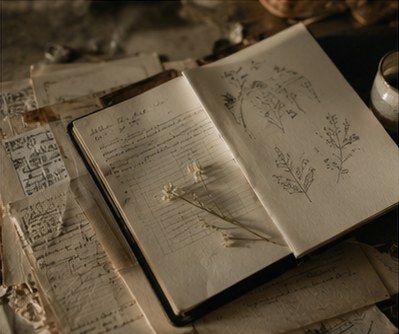
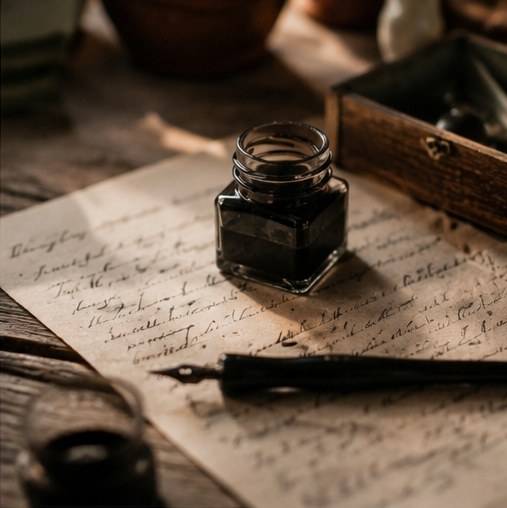
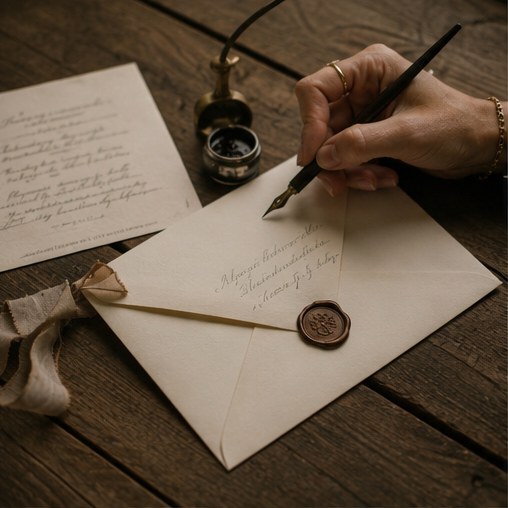
The mistake is volume. Lace is a voice that whispers, and putting it everywhere is shouting a whisper. One table runner on the head table — not every table. A strip wrapped around the bouquet stems where hands will actually touch it. Your grandmother's veil worn for the ceremony and taken off for the dancing, which is what she did with it too.
Our favorite trick costs almost nothing: photograph a piece flat on linen, and let its pattern become the wedding's pattern — echoed in the invitation border, the menu header, the little flourish by your names. The lace itself stays safe in its box, and its handwriting still signs every page of the day. That is what we're building into our next collection, and it's why.
And when the day is over: cool water, a white towel, flat in the shade, back in the cedar. Then — this is the important part — write down whose it was. A slip of paper in the box. Lace without its name is beautiful. Lace with its name is a relic.
— Ana
Lace robes on a brass rack, a mirror older-looking than it is. Ana pinned the whole quiet hour.
Keep reading
A Wedding Grows in the Greenhouse · The Unfussy Invitation
Read next, in the Lookbook: The quiet hour
The Old Lace collection is on the drafting table. The Vine is already taking names — and the lace for your bouquet stems starts at a florist near you.