The Editorial · Cover Story
A Wedding Grows in the Greenhouse
We moved the tomatoes out in April and married two people in June. This is how a working glasshouse becomes a chapel — and goes back to work on Monday.
By Sam · Photographs by the editors
The glasshouse was never supposed to be pretty. It is a tool — the way a barn is a tool — a hundred and forty panes of old glass whose whole job is to trick seedlings into thinking winter ended early. For ten months of the year it smells like potting soil and warm tomato leaves, and the aisle down the middle exists so a wheelbarrow can fit, not a bride.
Then a friend of ours got engaged, stood in that aisle at golden hour holding a flat of zinnias, and said the dangerous thing out loud: what if we did it here?
Ana said yes before I could say anything about drainage. That's roughly how every project on this farm gets approved.
Here is what nobody tells you about marrying people in a working greenhouse: the building is already doing most of the work. You do not decorate a glasshouse. It has been decorating itself since March. Every table you'd rent is uglier than the potting bench that's already there; every uplight a rental company owns is dimmer than what the sky does through old glass at seven in the evening. Our whole job was to get the vegetables out of the way and then have the discipline to stop.
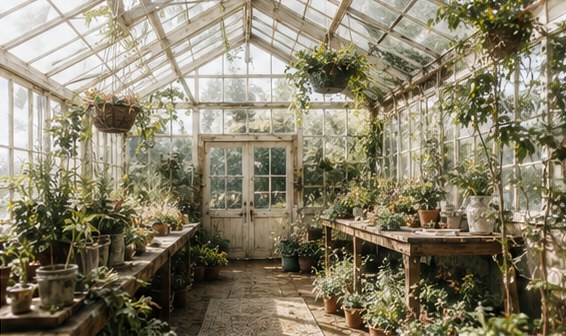
April. The tomatoes have been evicted; the light stays.
You do not decorate a glasshouse. It has been decorating itself since March.
Two weekends. That's the real budget line nobody prints. One weekend to move every living thing to the cold frames and scrub a winter of algae off the south wall — vinegar, a deck brush, and a hose fight that Ana claims she won. One weekend to bring the wedding in.
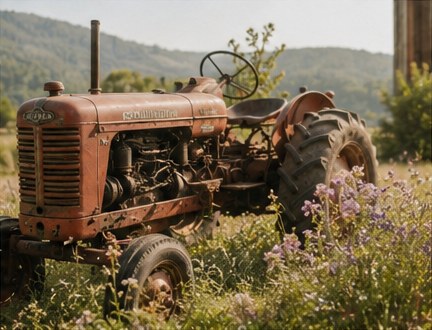
The tables came out of the barn behind the tractor, which is the only way anything heavy has ever moved on this property. Fourteen feet of old fir boards on trestles, sanded just enough that the linen wouldn't snag, not so much that they'd forget who they are. The chairs were borrowed from the Baptist church in town, which will lend you almost anything if you return it clean and mention it in the program.
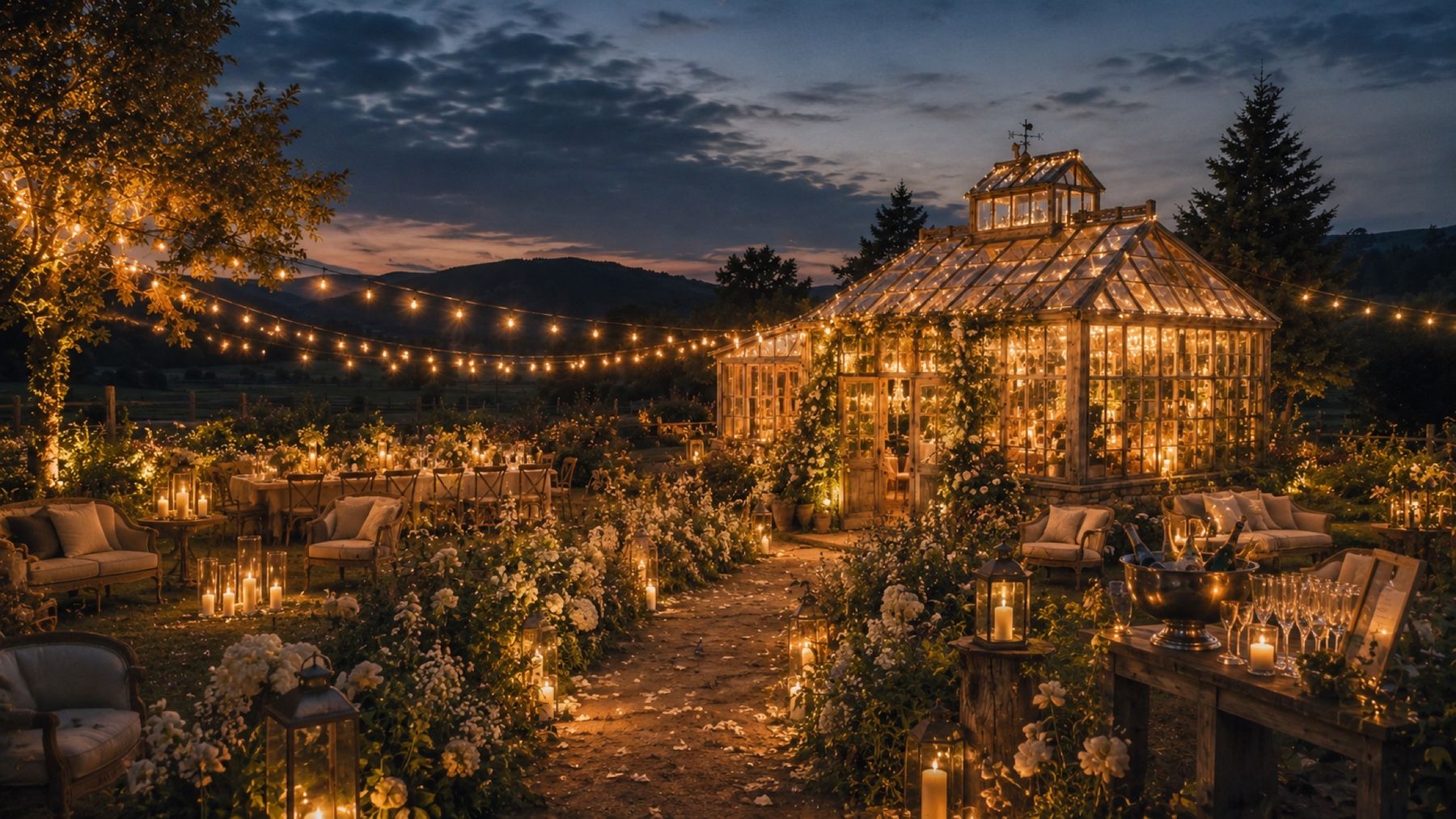
String lights went up the ridge line with a staple gun and a prayer. Candles did the rest — forty of them in jars and lanterns down the tables, because open flame and a wooden building full of dry stems is exactly the kind of decision you should make deliberately, with buckets standing by, the way farm people have made it for two hundred years.
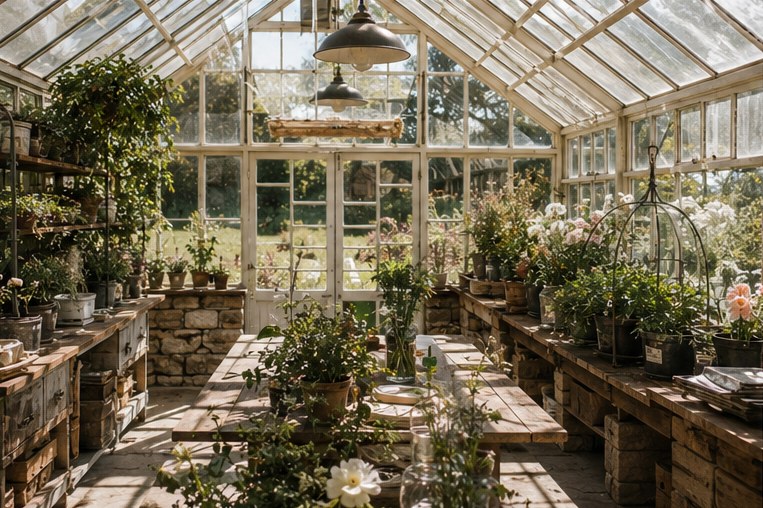
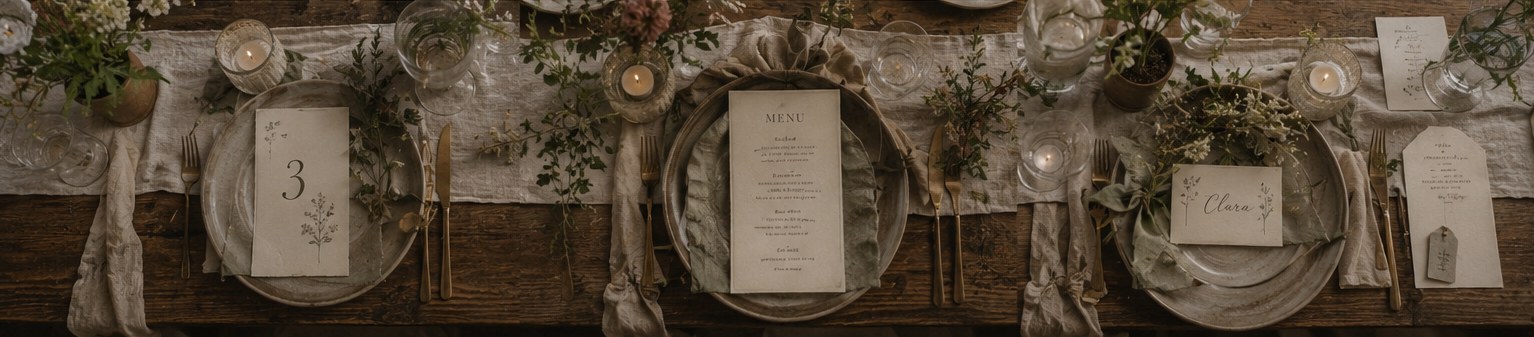
The long table, an hour before. Menus and place cards from our own press.
Ana pinned every piece of it — tap a number, take it home.
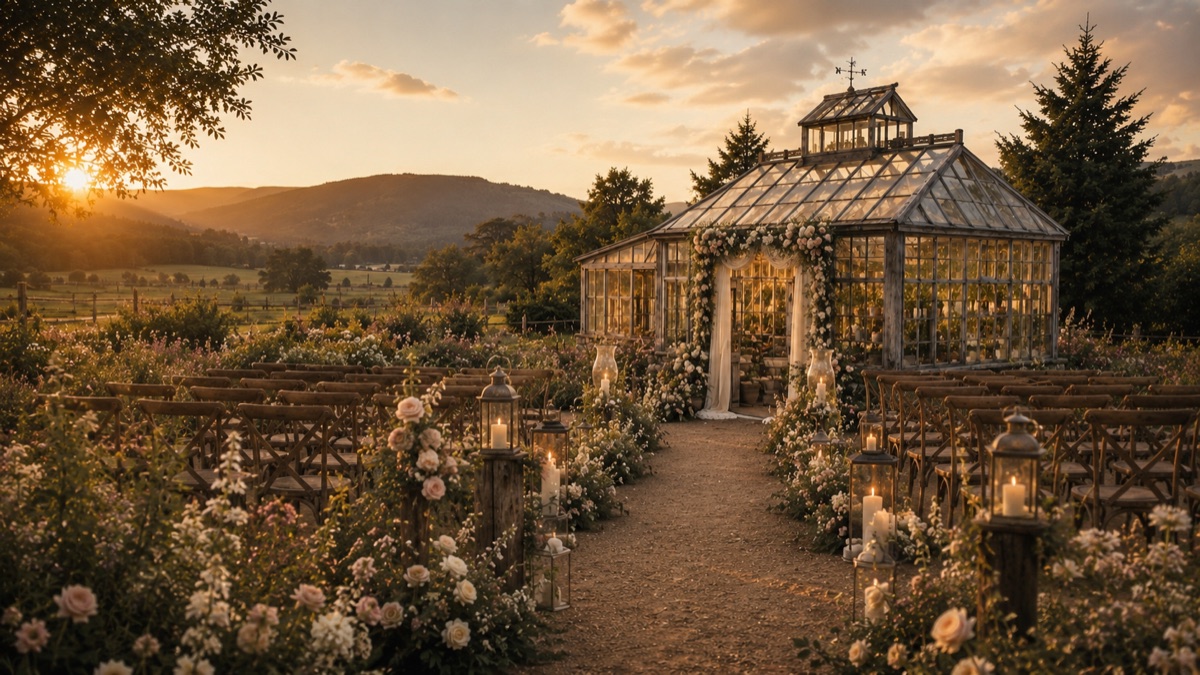
The ceremony took twenty minutes. The light took care of the rest — that long amber hour when the sun drops behind the tree line and every pane goes gold at a slightly different moment, like the building is applauding one section at a time. People keep asking what we spent on lighting. We spent nothing. We spent forty years not tearing down an old greenhouse.
By Monday the tables were back in the barn and the tomatoes were back on the benches, entirely unimpressed by what had happened in their absence. That's the part I'd sell hardest to anyone considering it: a wedding that borrows a working building gives the building back. The room where they said their vows is growing food again. You can visit your own wedding venue in August and leave with a sack of peppers.
Marry somewhere that has a job. The room will mean more, the pictures will lie less, and the rent is a favor and a clean sweep-up. Every town has a glasshouse, a barn, a feed store with good bones. Ask the person who owns it. The worst they can say is what our tomatoes said — nothing at all.
— Sam
The whole ceremony is an arch, a bolt of chiffon, and good light. Priced honest.
Keep reading
Everything We Know About Old Lace · The Unfussy Invitation · Fall Wedding Flowers That Are Actually in Season
Read next, in the Lookbook: The long table, an hour before · Vows in the orchard
Flowers for your own glasshouse wedding? Start with the one good florist in your town.